Why testing as early as possible is important
Next Saturday, May 23rd 2026, we'll be organizing the very first pre-alpha demo of our upcoming RPG for a small group of colleagues. It's a huge milestone for us and honestly, a slightly terrifying one too.
Up until now, the game has only been seen and played by the people actively working on it. We know every mechanic, every shortcut, every unfinished edge. But next week, for the first time, fresh eyes and fresh hands will step into our world. That changes everything.
We're excited, of course, but mostly nervous.
What will people think of the game? Will they understand what we're trying to create? More importantly… will they actually enjoy playing it?
As developers, you spend so much time inside your own project that it becomes very difficult to judge it objectively. Features that seem obvious to us may not be obvious at all to new players. Mechanics that feel intuitive after months of testing could end up confusing in the first five minutes. That's exactly why moments like these are so important.
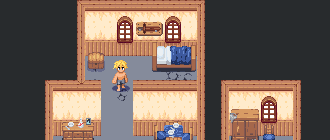
The demo itself takes place during the prologue chapter of the game, giving players a glimpse into the very beginning of the adventure. While the project is still in an early state, we already have several core systems up and running. Players will be able to explore the world, interact with characters, manage their inventory, follow quests, and experience conversations and environmental interactions firsthand. Collision detection and other technical foundations are also functional and part of the experience.
Not everything is where we want it to be yet, though.
Combat, in particular, is still a bit wonky. We're aware of that, and we know there's still a lot of iteration and balancing ahead before it truly feels satisfying. But game development is a process, and we believe it's important to start gathering feedback early rather than waiting for everything to feel “perfect.” If we waited for perfection, we would probably never show the game at all.
One of the biggest questions on our minds is whether players will naturally understand the controls and objectives. Interestingly, we deliberately chose not to include a tutorial in the game. We wanted to see if the world, interactions, and design communicate enough on their own. It's a risky decision, but also an important test.
Will players instinctively know what to do? Will they experiment and discover things naturally? Or will they feel lost without guidance? We honestly don't know yet.
And that uncertainty is both exciting and terrifying.
No game will ever please everyone, and we know that. Still, sharing something you've worked on for so long can feel incredibly personal. The first time someone else plays your game is the moment it stops being just “your project” and starts becoming an experience for others.
No matter the outcome, next Saturday will be an important step forward for us. We'll learn a lot, gather valuable feedback, and hopefully come away with a clearer understanding of what works and what still needs improvement.
Now we just have to survive the nerves until then.